Articles
Preprint#
Publications#
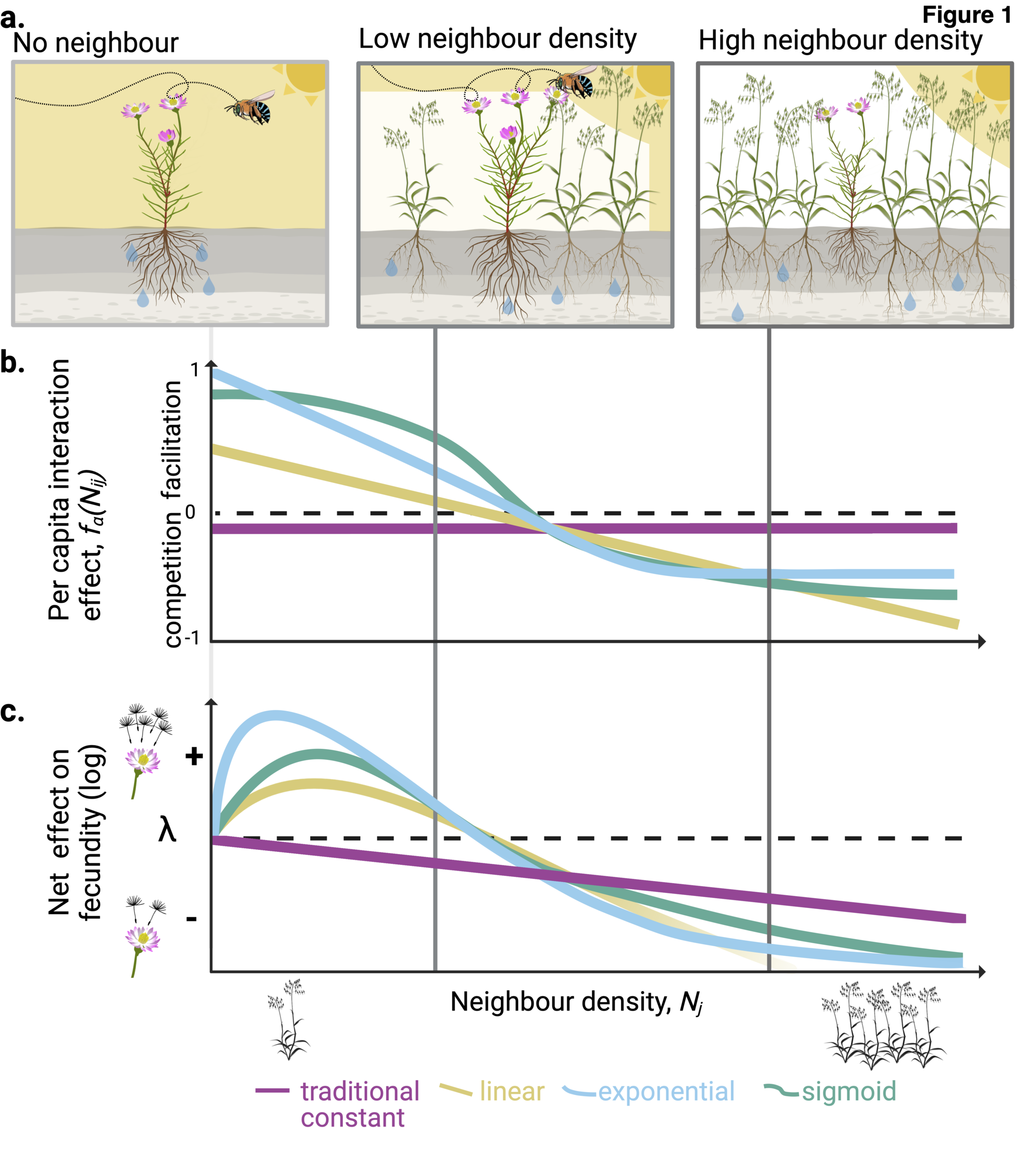
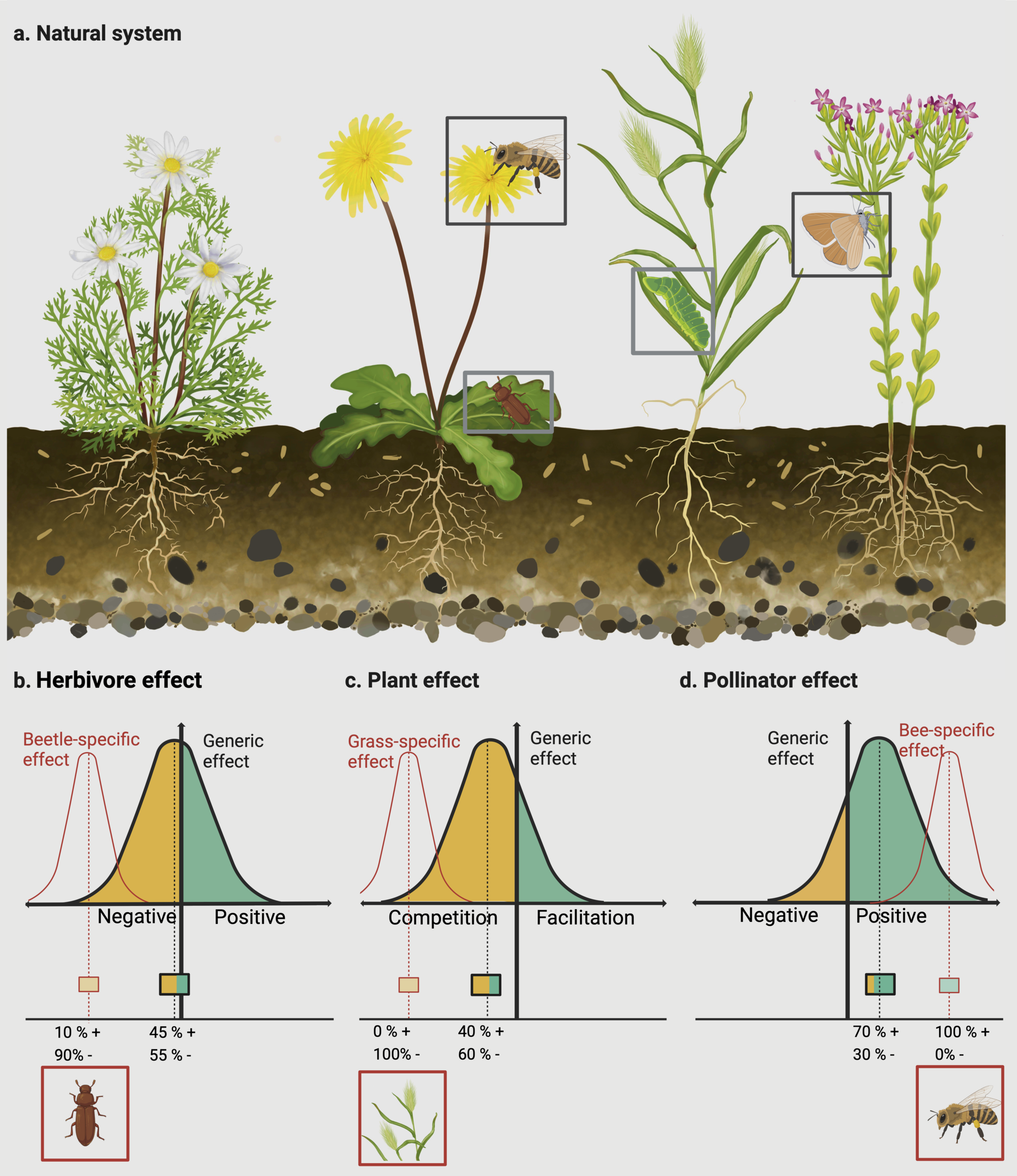
Buche, L., Shoemaker, L., Hallett, L., Vesk, P., Weiss-Lehmann, C., Bartomeus, I., Mayfield, M. & Godoy, O.
Ecology Letters, 2025 | DOI: 10.1111/ele.70059 | GitHub
We explored the patterns of species performance, dependent on species interaction strengths and higher-order interactions with species belonging to the same and other trophic levels. We found that a continuum from positive to negative interactions, containing mostly guild-level effects and a few strong taxonomic-specific effects, was sufficient to describe plant performance.
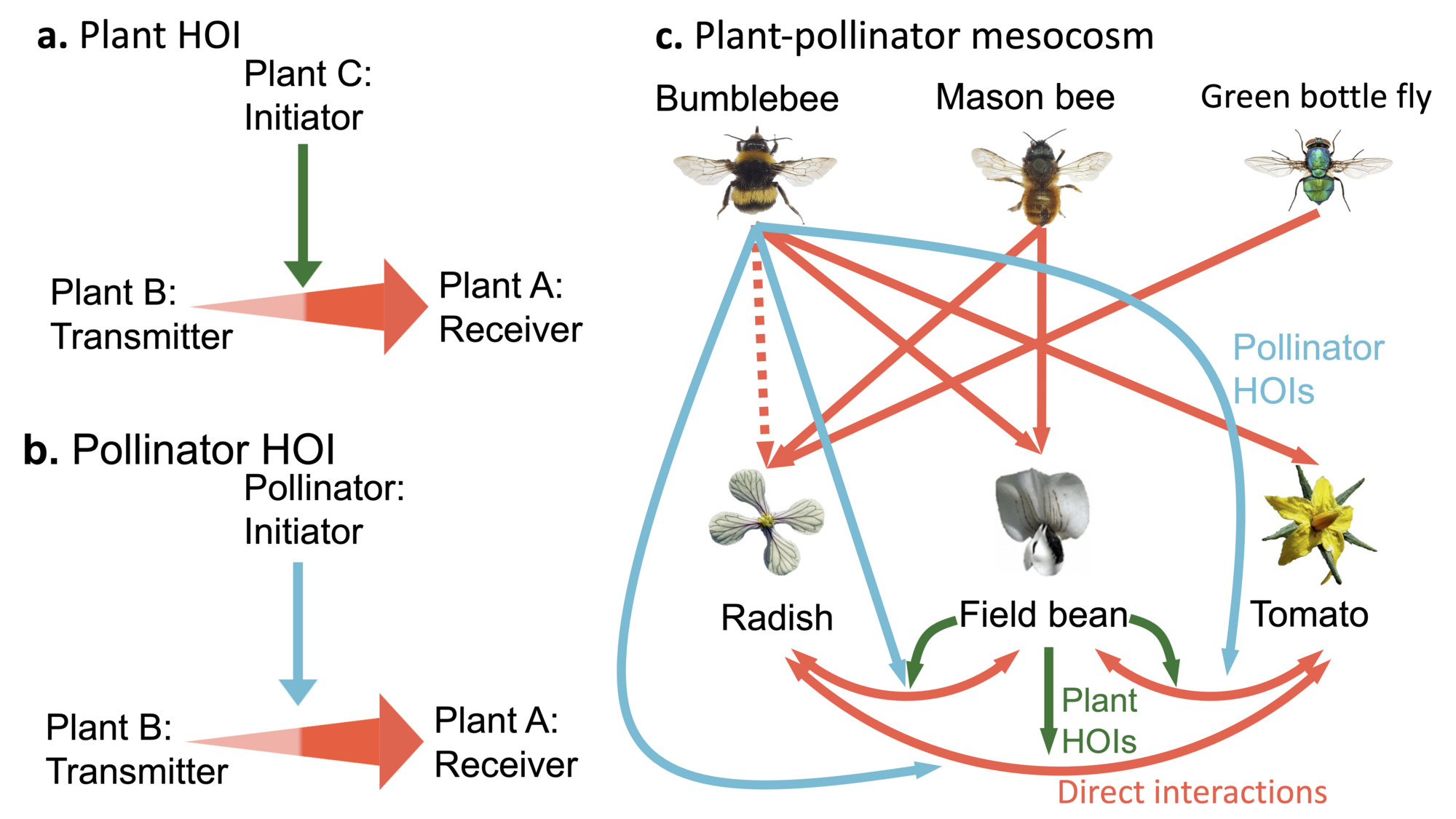
Buche, L., Bartomeus, I. & Godoy, O.
The American Naturalist, 2024 | DOI: 10.1086/729222 | GitHub
*President choice award 2025*
We showed the importance of multispecies interactions in inferring species persistence. A third species can change the nature (sign and strength) of a pairwise interaction (i.e., higher-order interactions). While such interactions are traditionally ignored, we show that higher-order interactions promote the opportunities for multispecies communities to persist compared with a scenario without multispecies interactions.
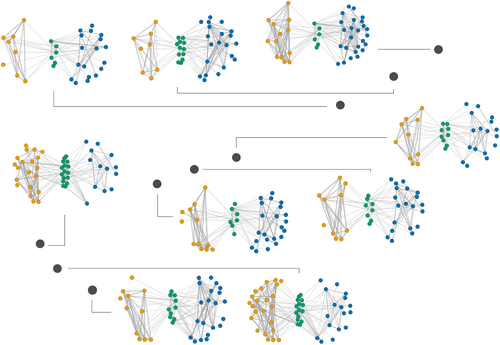
Garcia-Callejas, D., Godoy, O., Buche, L., Hurtado, M., Lanuza, J.B., Allen-Perkins, A. & Bartomeus, I.
Ecology Letters, 2023 | DOI: 10.1111/ele.14206
Species persistence depends on the structure of their biotic interactions. The results show that biotic interactions within and across guilds are not random in nature. Considering natural complexity, such as community richness, increases the potential for species to persist and form complex communities thanks to self-regulation and niche-partitioning.
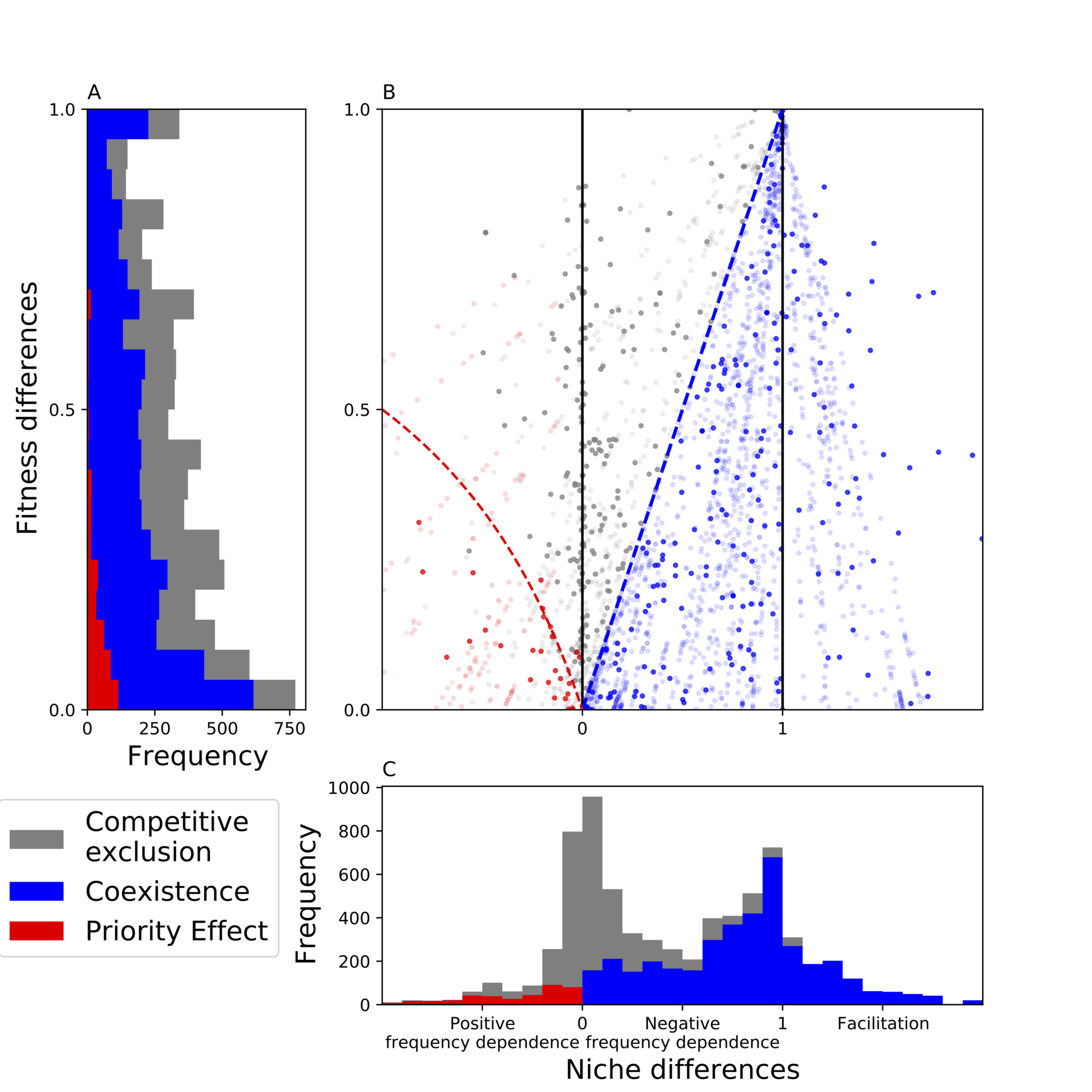
Buche, L., Spaak, J.W., Jarillo, J. & De Laender, F.
Journal of Ecology, 1–12 | DOI: 10.1111/1365-2745.13992 | GitHub
Based on a meta-analysis of species interactions across taxa, we show the importance of niche differentiation as a mechanism for pairwise coexistence. The coexistence of two species is assessed based on their ability to differentiate along their niche and fitness axes. We show that their difference along the niche axis is more related to coexistence than along their fitness axis.